 | 3.5. Integrating objections: process | |
|---|---|---|
| ↢ | Chapter 3. Making Policy Decisions | ↣ |
Dealing with objections is one of the core skills of sociocratic group process. If we know how to deal with objections in a constructive and time-efficient way, we will turn every concern into a better decision! Listening to and exploring what lies under an objection can take time. Having a way of efficiently dealing with objections will make it doable for an organization to take the time to address objections.
Addressing objections follows the same process of understand – explore – decide. The first step is to understand the objections thoroughly; then we explore what options we have. The amended proposal will be input for the decide phase.
Figure 3.42. Objections send the circle into an extra loop before going back to the process – this time with an even better understanding of the topic and a better proposal on the table.
 |
Figure 3.43. Understanding an objection
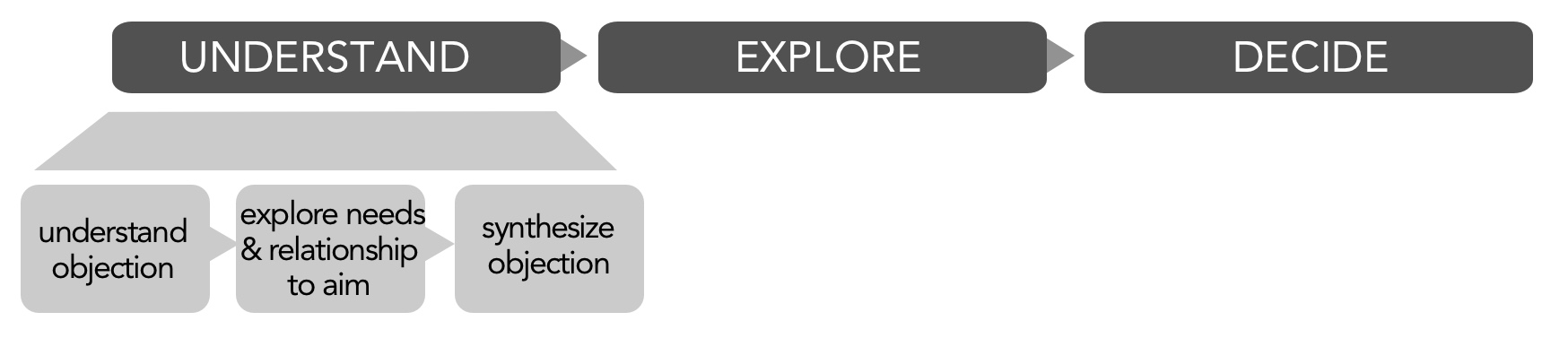 |
We start with curiosity in trying to understand the objection.
Intention: Understanding the objection.
Tools: The group will try to find out what is underlying the concern.
We can ask the objector “what do you fear might happen? How will we know?”
We can synthesize what we hear and reflect back to the objector (and the circle) to find out whether the objection has been fully understood.
If there are more objections, we can hear them now. After hearing all objections, the facilitator decides whether to deal with the objections one by one or at once.
Complete when: No one has questions about the objection.
The circle takes ownership of the objection and identifies how the concerns are related to the circle’s aim and needs.
Intention: Exploring how the objection relates to the circle’s aim and what needs are underlying the objection.
Tools: The easiest way to do this is a reaction round.
Complete when: No one has any ideas to add.
A side note: Imagine a situation where someone brings up an objection that is seen by other circle members as a personal preference (no negative impact on the circle achieving its aims). Consent is not a mechanism that separates objections from preferences in a clear-cut manner. Lack of skill in dealing with objections, like dismissing someone’s objection by saying “your objection is not valid” and social-emotional backlash can actually cause dysfunction and decrease the circle’s ability to achieve its aim. It will not help us to have been ‘‘right’’ about the personal preference. If people know they are heard and trust is built, it will be easier to cooperate. To avoid dynamics of people-pleasing, train everyone both on the definition of consent and on communication skills.
After exploration comes synthesizing the information.
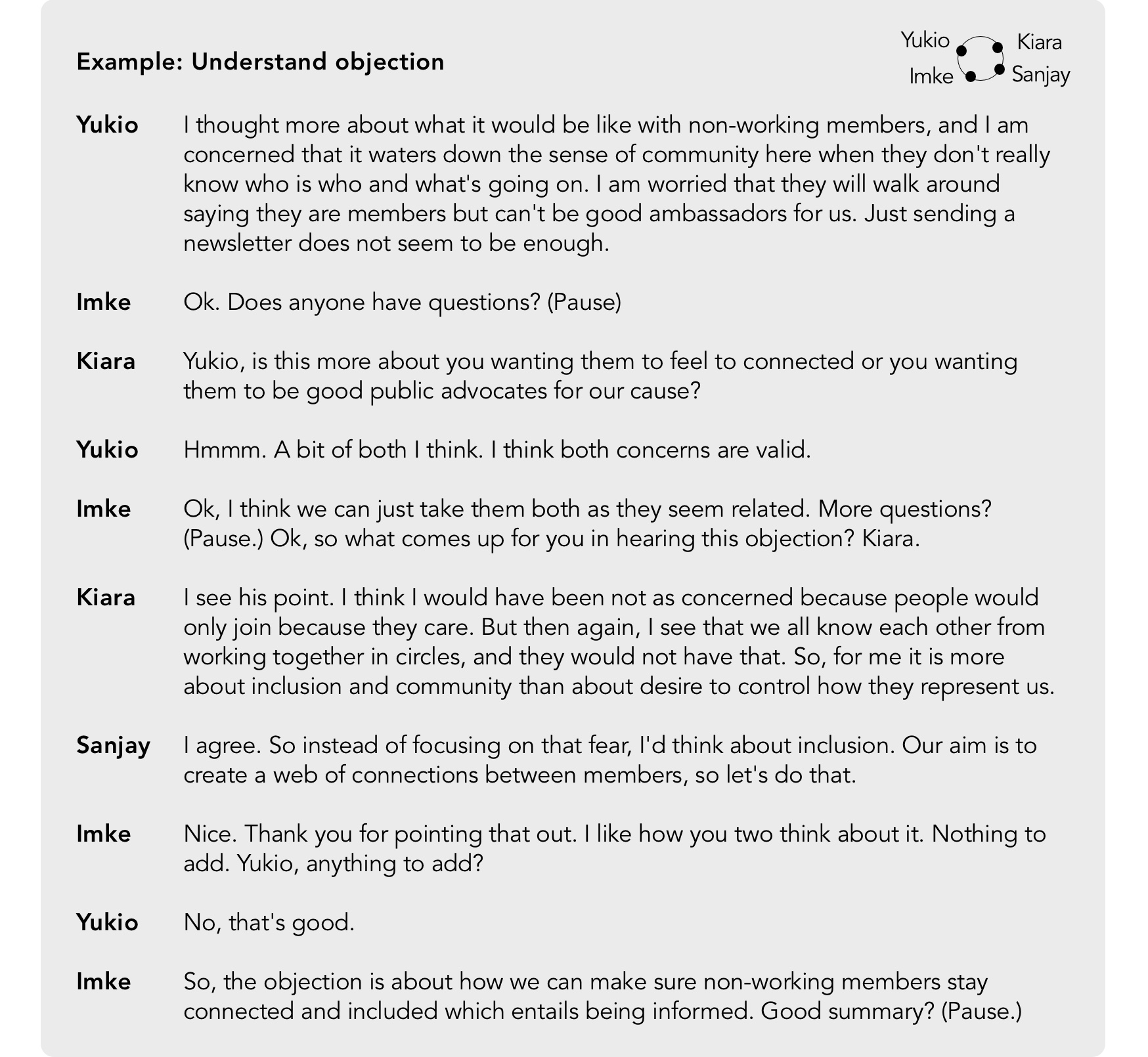
Intention: Synthesizing whether there is a need to amend the proposal (see Figure 3.45, “Seeking understanding for an objection (3 steps)”).
Tools: The facilitator (or an appointed circle member) synthesizes the objection the way it has been understood by the circle.
Complete when: There is consent on a synthesized statement.
Now that we understand the objection, we explore our options. This phase is similar to generating a proposal. But this time, we are working with improving an existing proposal.
Figure 3.44. Exploring options for improving the policy
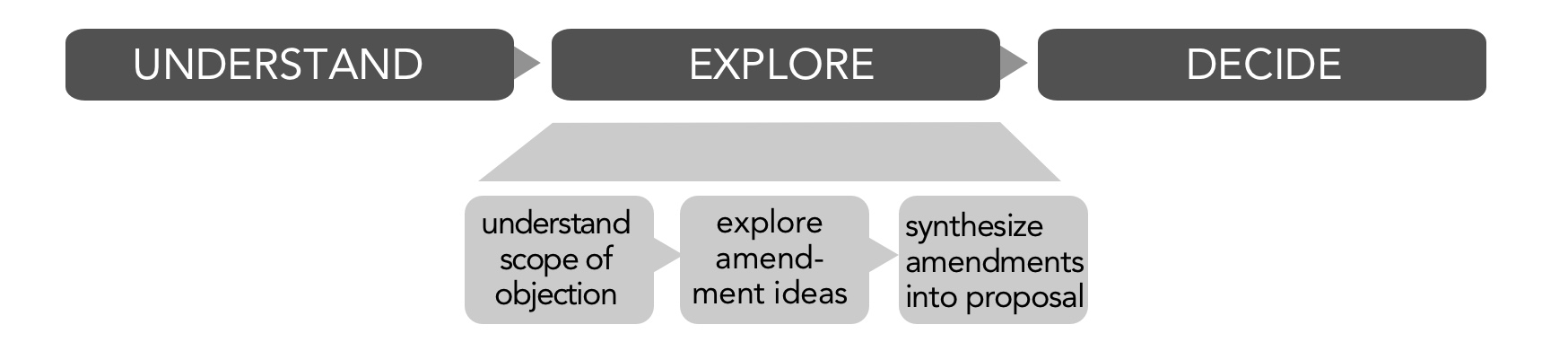 |
Figure 3.45. Seeking understanding for an objection (3 steps)
 |
For a thorough process, it is a good idea to spend a minute on understanding which areas of the proposal need changing. Skip this step if the objection clearly only affects a defined area of the proposal and is not likely to have ripple effects. Alternatively, the facilitator may help point the group to the relevant paragraphs that are affected by the objection.
Intention: Understanding what parts of the proposal need changing.
Tools: We can either do a round on reviewing what pieces of the proposal are affected and what might remain untouched, or the facilitator offers thoughts and allows for reactions.
Complete when: Everyone understands what areas are affected.
Now it is time to problem solve! What can we do so that the concern brought up by the objector can be used to improve the proposal?
Intention: Exploring ideas for amendments to the proposal.
Tools: Let everyone give their ideas on what can be changed.
This is a good place for a reaction round on amendment proposals. Keep going in rounds while ideas keep building.
Additionally, the facilitator might review the typical strategies for addressing an objection (see section Section 3.5.3, “Options for amendments”) to give circle members more ideas and wider view on options.
Capture amendment ideas in writing.
Complete when: No one else has amendment ideas to add.
Once everyone has been able to contribute their ideas, the amendment ideas need to be organized so we can go back into the consent process.
Intention: Synthesizing amendment ideas into new proposal.
Tools: The facilitator will either synthesize, or will appoint someone to summarize the amendments and how they fit into the proposal. The aim is to have a coherent proposal to go back to the consent process.
Complete when: There is an amended proposal in writing.
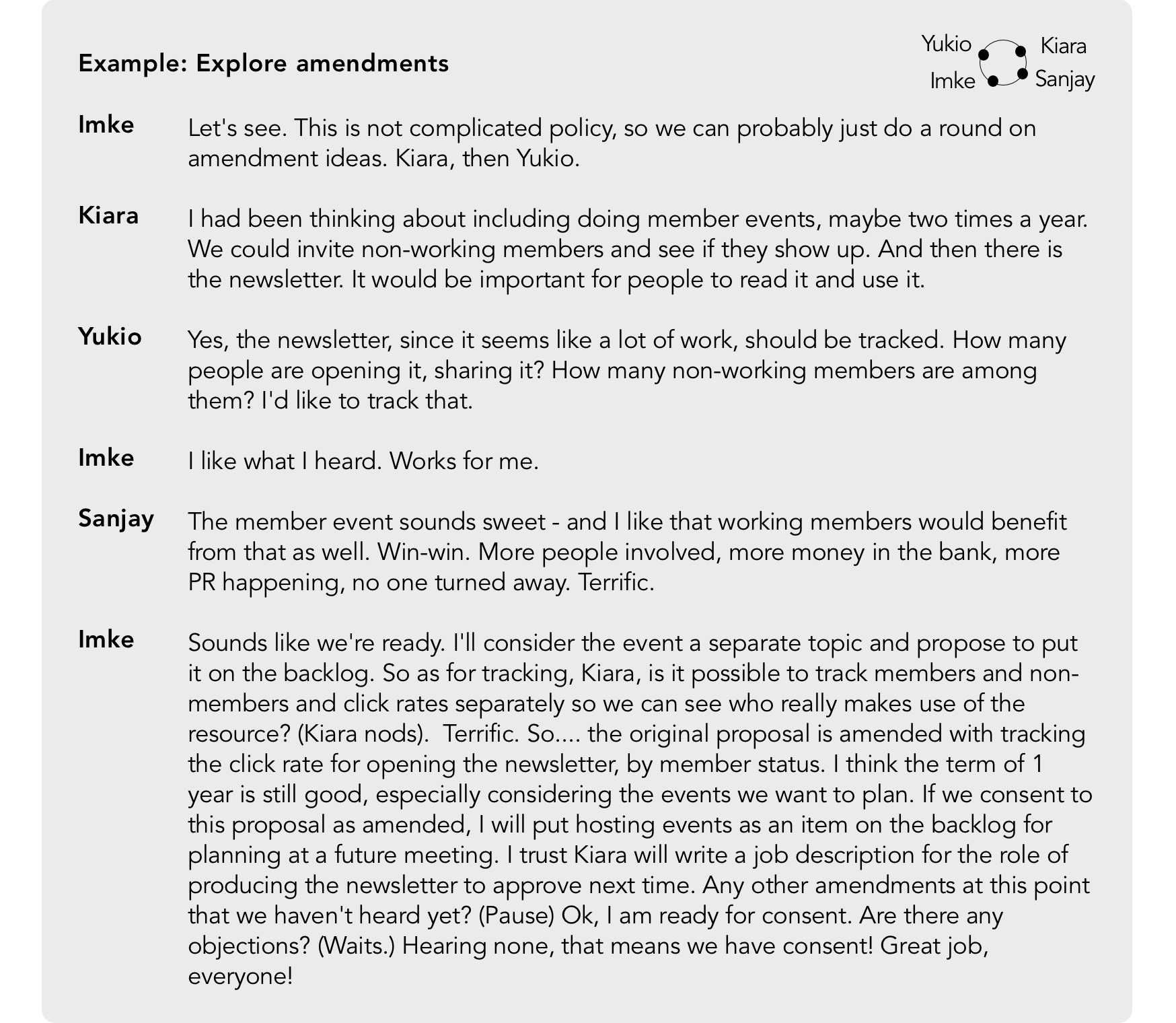
Figure 3.46. Finding amendments for addressing an objection
 |
There are countless options for amendments or modifications, depending on the nature of the proposal and objection. A good solution will come up if everyone has had a chance to express themselves.
There are three go-to strategies that are extremely powerful and can be used in almost any context. It is helpful for the facilitator or others to name the different options:
Figure 3.47. Modifying a proposal
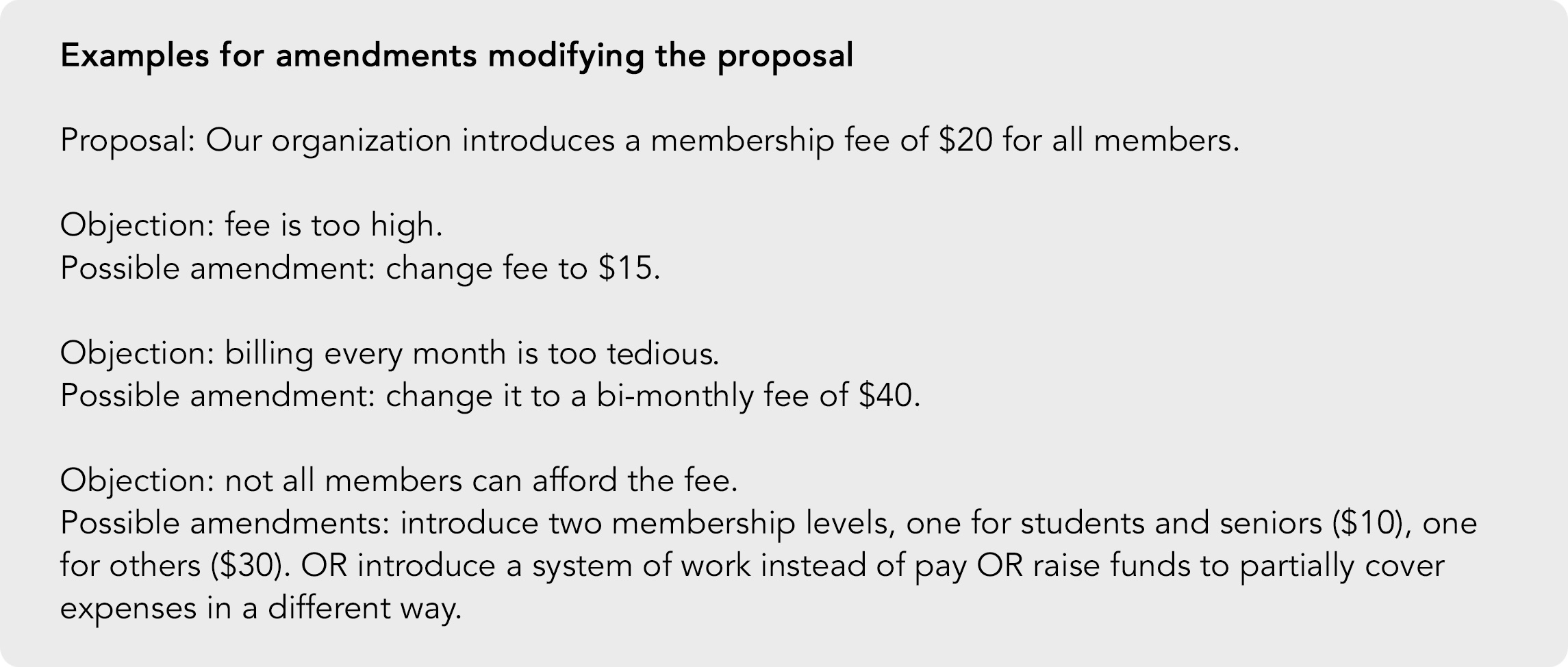 |
We can change anything in the proposal to integrate the objection. The options for revisions of content are countless and specific to your context. This section cannot possibly cover all the ways one might be changing proposals. Figure Figure 3.47, “Modifying a proposal” on page Figure 3.47, “Modifying a proposal” @@TODO@@: Figure out page references. lists examples of possible modifications.
If there is an objection to a policy proposal, one option to move forward is to shorten the term. If a circle member objects to a proposal, they might be willing to consent to trying it out for a shorter time. Oftentimes, this makes it easier for circle members to consent. This strategy works best in combination with the next strategy, measure the concern. (See section Section 4.4.6.2, “Term ends” on page Section 4.4.6.2, “Term ends” @@TODO@@: Figure out page references. on term ends for policy.)
Shortening the term of a proposal means the policy will be revisited sooner. We will then see whether the policy brought negative changes and we can then adjust the policy. Therefore, shortening the term of a policy increases a circle’s willingness to experiment and innovate. The question changes from “should we drop this proposal?” to “would it feel safe enough to try it for 3 months? 4 months?”
An objection is not a reason to drop a proposal. How can we learn?
In sociocracy, we broaden our view using another option: measure the concern. That means that we go ahead and try something (with everyone’s consent) but we put a measurement in place so that we don’t just hope for the best but actually know what the impact of our policy is.
For example, a non-profit is looking for ways to reduce operational costs. Historically, they have sent out monthly newsletters. The proposal on the table is to reduce the frequency of newsletters to save money. A circle member expresses a concern that the click rate on the website might go down, leading to a decrease in donations. The circle does a quick reaction round where everyone shares a reflection on the concern raised. The circle amends the proposal: by consent, they decide to go ahead with the reduction in publications, and at the same time perform a cost-benefit analysis. They want to find out if the savings generated by reducing the operational costs have a negative impact on donor generosity. They craft an additional proposal to measure and monitor the outcome of reducing the frequency of publications. The proposal includes:
weekly monitoring of the website click rates and donations, for a period of 6 months.
set measurement parameters, and determine a level at which to abandon the experiment if the rates drop alarmingly.
if the click rate drops by 15%, and/or
if the donations drop by 10%
a role is formed to carry out the task and to monitor and report.
At the end of six months, the circle finds that there has been a moderate drop (7%) in clicks and a minor drop (4%) in donations. This feedback provides data for policy review.
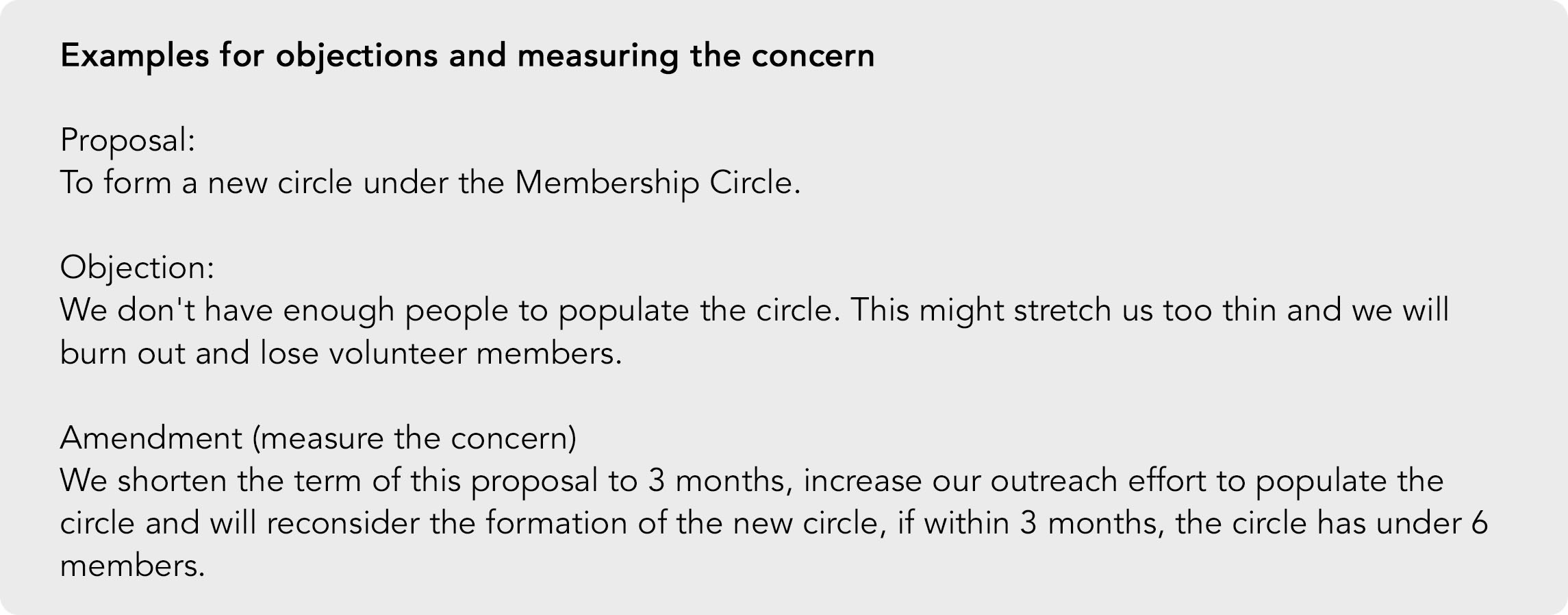
The point here is that we don’t want to waste time in speculating what might happen. We find a way of trying it out. Since we are measuring the concern, we keep the risk as small as possible. In the same way as we might count clicks and donations, we can also count registrations, complaints, count clients or sales. Everything that cannot be counted can still be surveyed: members, staff, workshop participants, hosts, customers. Example Figure 3.48, “Measure the concern and shorten the term to address an objection” is an example of a shorter term and a measurement to see whether concerns are borne out. A habitual nay-sayer may consent if we take their concerns seriously and put good measures in place.
Figure 3.48. Measure the concern and shorten the term to address an objection
 |
An experienced group will combine all the options for amendments. Always try to make a step forward. Do not be content with a decision not made. Don’t kill proposals by being indecisive or by failing to take some action to generate more information. We want to either:
Make the term shorter.
Make it safer (measurements).
Make a plan of how to get more information.
Make a plan of when/how to talk about the proposal again.
Even dropping a proposal needs to be a consent decision to ensure intentionality.